Skip to content
The Library and Learning Center will be closed Monday, May 25th for Memorial Day.
Learning Resources
Play

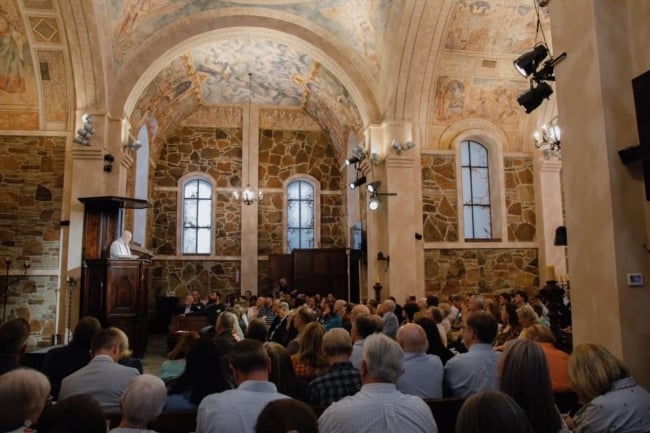
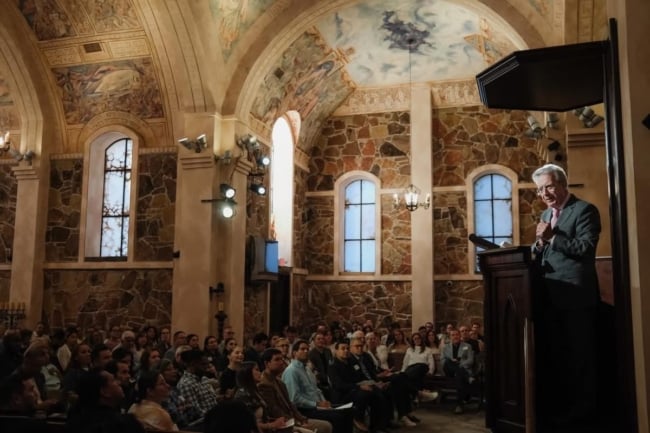
Hazael, An Aramean Action-Hero, Scourge of the Hebrew Kingdoms

Lecture

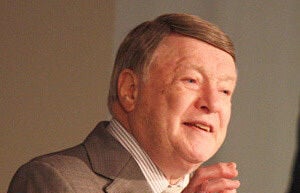
Lawson Younger

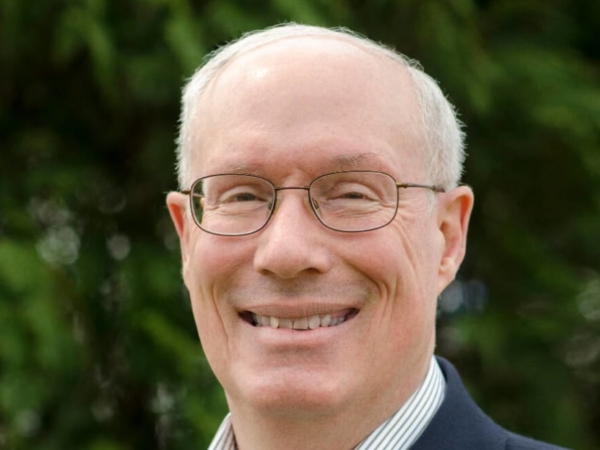
K. Lawson Younger, Jr. (PhD. Sheffield University) is Professor Emeritus of Old Testament, Semitic Languages, and Ancient Near Eastern History at Trinity Evangelical Divinity School of Trinity International University, Deerfield, Illinois.

A specialist in Assyriology, Aramaic, and Hebrew Bible, Dr. Younger has published numerous works involving ancient Near Eastern texts and their relationship to the Hebrew Bible. He is currently writing a book on Aramean Religion.

Discover more

1:10
Beloved But Known
Ft. Ben Witherington

Emanuel Tov explains that the Qumran scrolls were produced by highly trained scribes who followed consistent practices in layout, spelling, and correction, revealing an organized scribal culture rather than random copying. These scribal habits help scholars understand how biblical and non-biblical texts were transmitted and preserved in the Second Temple period.

1:28
The Mission of God in the Gospel of John
Ft. N.T. Wright

ohn frames his gospel with deliberate echoes of the creation story in Genesis, all the way from ‘in the beginning’ at the very start to the ‘new Eden’ themes in chapter 20. In chapter 1 the focus is on Jesus as the ‘Word made Flesh’, uniquely revealing the glory of God to the world, but in chapter 20 the focus is on the disciples, who are equipped with the Spirit to be, for the world, what Jesus was for Israel (‘As the Father sent me, so I send you’). Picking up from the earlier hints about the Spirit in chapters 7 and 14-16, we glimpse the task of the Church in terms of the rivers of living water (ch. 7) and the holding of the world to account (ch 16). John 20 thus shows how Jesus’ resurrection and ascension, and the gift of his Spirit, launch God’s mission of new creation.

1:22
C.S. Lewis and the Problem of Pain
Ft. Amy Orr-Ewing

C.S. Lewis has had a phenomenal impact on the reception of the Christian faith beyond his own lifetime. His writing on the Problem of Pain has been particularly meaningful for people struggling to reconcile a loving God with this pain filled world. In this session we will explore Lewis’ approach to suffering and ask what we can learn from it today and consider how to develop our own responses to the problem of evil and suffering that connect with the cultural moment we find ourselves in.

1:10
The Gospels and the Anti-Slavery Movement
Ft. Esau McCaulley

During the 19th-century, there was extensive theological and biblical debate around the issue of slavery in North America. The scholarly consensus seems to suggest that the pro-slavery faction had the better biblical argument, but the pro-abolitionist side had the better moral argument. In addition, many contend that abolitionists searched frantically and often in vain for biblical support for abolition, especially in the gospels. Dr. McCaulley challenges that consensus by focusing on the use of the Jesus tradition in the slavery and abolitionist debates by demonstrating that abolitionists made extensive use of the Jesus tradition in their reasoning and were much more confident in their position than later scholars and clergy recognize.

1:10
The Resurrection of Jesus: The Minimal Facts Approach
Ft. Gary Habermas

In this lecture, Gary Habermas will explore his approach to analyzing ancient sources to determine “what really happened.” He argues that even agnostics, atheists, and skeptics must acknowledge certain facts. Dr. Habermas identifies six historical facts that support the claim that the bodily resurrection of Jesus offers the most compelling explanation. He contends that alternative interpretations do not account for the evidence as effectively.

1:11
Tragic Lament
Ft. Frederico Villanueava

For some time now there have been calls for the recovery of lament. Yet despite these, there appears to be a continuing lack of appreciation for the “costly loss of lament.” In this lecture, Dr. Villanueva will make the case that one of the reasons for the continuing loss of lament is due to a limited vision of worship, which only sees a movement to praise. To recover lament, we need a more encompassing vision of worship itself, one which sees a movement not only from lament to praise but also the opposite movement from praise to lament.

Visiting us, to advance your theological study and explore your faith